

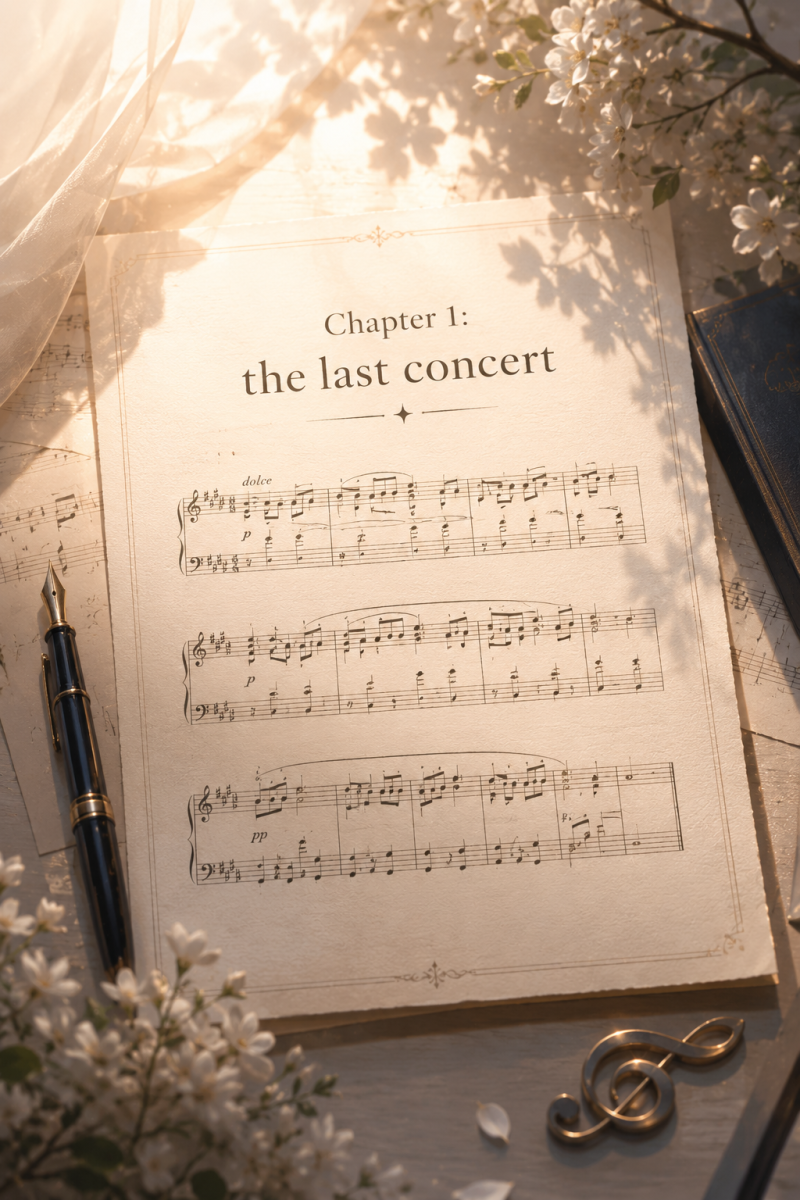
The first thing I remember is the sound. Not the music. The silence before it. Even now, years later, that's the part that returns most often. The waiting. The breath held by hundreds of strangers. The feeling that something enormous was about to happen.
I was eight years old, sitting in a red velvet seat that swallowed half my body. My feet couldn't touch the floor. Every time I swung my legs, my shoes bumped against the chair in front of me. My mother kept pulling me back. "Sit still."
I looked down at my motionless legs. "I am sitting still."
The look my mother gave me suggested a disagreement. "Alex."
The single word carried more warning than the entire sentence before it. I stopped swinging my feet. For approximately three seconds. Then I started again.
The concert hall was the most beautiful place I had ever seen. Gold balconies curved around the room like waves frozen in place. Crystal chandeliers hung from the ceiling. Light reflected off polished wood and brass railings, making everything glow.
People dressed differently here. The men wore dark suits. The women wore long dresses. Everyone looked expensive. Everyone except me. I tugged at the collar of my shirt. It scratched. My mother noticed. Without looking away from the stage, she reached over and adjusted it. "There."
I rubbed the side of my neck where the fabric scratched. "It still scratches."
"It's a shirt," my mother said, smoothing an imaginary wrinkle from my shoulder.
"It feels like sandpaper," I complained, tugging at the collar again as if I could somehow make it less miserable.
A laugh escaped her. The sound was soft, warm, and tired all at once. When I looked up, I noticed something shining in her eyes. Tears. I frowned.
"Why are you crying?"
My mother blinked quickly and turned back toward the stage. "I'm not."
"You are." I pointed at the tear sliding down her cheek and gave her a look that suggested she was attempting to argue with observable reality.
For a moment, my mother pressed her lips together. The smile grew smaller but didn't disappear. "I'm emotional."
I tilted my head, studying her face. The answer explained absolutely nothing. "What does that mean?"
My mother let out a quiet breath and dabbed at one eye with a fingertip. "It means I'm crying."
That seemed unnecessary. Nothing had happened yet. The musicians were still arriving. A violinist walked across the stage. Then another. A cellist. A flutist. One by one, they settled into their seats. The room filled with scattered sounds.
Violins testing strings. Woodwinds playing scales. Brass instruments humming low notes. It sounded messy. Broken. Like everyone was playing a different song. Yet somehow I liked it.
The noise reminded me of standing at a train station. People moving in every direction. Conversations colliding. Announcements echoing overhead. Chaos that somehow worked. The lights dimmed.
The room immediately quieted. My mother sat straighter. Her hands twisted together in her lap. Then the conductor walked onto the stage. Applause exploded around us.
I joined in enthusiastically despite having no idea who he was. The conductor bowed. The applause grew louder. But then something happened.
Another person appeared behind him. A tall figure dressed entirely in black. The applause changed. I didn't know how to explain it at the time. It simply became bigger. Warmer. The kind of applause people saved for someone they loved. The composer. My father.
Gabriel Reyes.
The entire audience stood. The sound rolled through the hall like thunder. Beside me, my mother's breath caught. When I looked up, tears were running freely down her cheeks now. "Mom."
My mother laughed shakily and brushed at the tears with the back of her hand. "I know."
"You haven't even heard the music yet." Confusion crept across my face.
"I know," my mother repeated softly, her voice thick with emotion.
Adults were strange. My father stepped toward the center of the stage. For a moment, he scanned the audience. Then he found me.
Even from that distance, I knew the exact second it happened. His face changed. The serious expression disappeared. A smile appeared. Not the smile he gave the audience. The smile he saved for me. I waved both arms wildly. My mother immediately grabbed one. "Alex."
But it was too late. My father had already seen. The smile widened. A small laugh escaped him. Then he bowed. The lights dimmed further. The audience sat. The conductor raised his baton. And the room became completely still.
I remember that stillness. More than anything. Hundreds of people. Not moving. Not speaking. Waiting. Then the first note appeared. It was so quiet I almost missed it. A single violin. Thin as a thread. Fragile. Beautiful. Another joined it. Then another. The melody spread through the orchestra like sunlight moving across water.
Something tightened inside my chest. I didn't understand music. Not really. I didn't know what made one piece better than another. I couldn't identify composers. I didn't know the names of half the instruments on stage. But I knew this.
The music felt alive. It breathed. It moved. It told stories without using words. The violins climbed higher. The cellos answered. The piano entered so softly it felt like someone whispering directly into my ear. I forgot to blink. Forgot to fidget. Forgot about the uncomfortable shirt. Forgot about everything. The music became the entire world.
At one point, I glanced toward the stage. My father wasn't conducting. He was simply listening. Standing near the orchestra. Watching. As if hearing the piece for the first time. And for a brief moment, I understood something. This music belonged to everyone in the room. But it had once belonged only to him.
A thought. An idea. A melody. Something invisible. Until he made it real.
The realization settled somewhere deep inside me. I didn't know it then. But it would stay there for years. The piece ended. Silence followed.
One heartbeat. Two. Three. Then the audience erupted.
Everyone stood. The applause was deafening. People shouted. Cheered. Whistled. Flowers appeared from somewhere. My father bowed once. Twice. Three times. Smiling the entire time. And I remember thinking—
I've never seen him look happier. Not at home. Not while working. Not while paying bills. Not while trying to fix things around the apartment. Here. On that stage. Surrounded by music. This was where he belonged. The memory ends there most days. Like an old photograph. Frozen. Perfect. Untouched by everything that came afterward.
But sometimes another memory follows. A smaller one. One that hurts more. Backstage after the concert. My father kneeling in front of me. Still dressed in black. Still smiling. Tired. But happy. He ruffled my hair. Asked if I liked the performance. I told him it was too long. He laughed so hard he nearly fell off the chair behind him. My mother laughed too. And for one brief moment, all three of us were laughing together.
No orchestra. No audience. No applause. Just us.
That was the last concert I ever saw him perform. The last composition he would ever premiere. The last time I would see him truly happy. Years later, I can still hear pieces of that night.
A melody. A chord progression. The echo of applause. The sound of my father's laugh. Some memories fade. That one never did.
Maybe that's why I keep returning to it. Because whenever life becomes difficult, I can close my eyes and find my way back. To the music. To the lights. To the man standing at the center of it all. The man who taught me, without ever saying the words, that music could turn silence into something worth listening to.
The train thundered past. The walls shook. The memory shattered. I opened my eyes. Dust drifted through a beam of morning light. A mug rattled on the windowsill. The ceiling groaned.
Another train. Another morning. And another day waiting for me downstairs.
38Please respect copyright.PENANAlTKqTbhwxf
The third train was always the loudest. I knew this because it passed every morning at exactly 6:17.
Not 6:16.
Not 6:18.
6:17.
The entire room rattled as it thundered past. My bed vibrated. The window shook. A crack running across the ceiling released a fine shower of dust. I stared upward. "Good morning to you too."
The train ignored me. The noise faded into the distance. Silence returned. Or at least the version of silence that existed near a train station. A car horn sounded somewhere below. Someone shouted. A motorcycle accelerated. A dog barked. The city stretched and groaned awake.
I sat up. The room was barely larger than a storage closet. One bed. One desk. One bookshelf. One window overlooking the tracks. That was it.
The entire apartment could probably fit inside one of the academy's practice rooms. Not that I knew that yet. At the moment, my biggest concern was whether I had enough money to buy shampoo.
I checked my phone. Thirty-seven dollars. Still rich. For approximately twelve minutes. I sighed and rolled out of bed. The floor was cold. The mirror beside the desk reflected a familiar face. Short hair. Tired eyes.
A person who desperately needed more sleep. I saluted my reflection. "Looking terrible," I mumbled.
The reflection agreed. Downstairs, I could already hear movement. The bakery was opening. Which meant Rosa was probably carrying trays that were far too heavy while refusing all offers of help.
Some people collected hobbies. Rosa collected unnecessary back pain. I pulled on a clean shirt and headed downstairs. The smell hit before I reached the bottom step. Fresh bread. Butter. Coffee. Sugar. Warmth. Home.
The bell above the door jingled as I entered the bakery. Rosa stood behind the counter arranging pastries. Golden morning light streamed through the windows, turning everything soft around the edges. For a moment, the entire room looked like something from a painting. Then Rosa spotted me. "You're late."
I glanced at the clock hanging above the display case. "By thirty seconds," I argued.
"Late," Rosa repeated, completely unimpressed.
I pointed toward the front door. "You haven't even unlocked the door."
"That's not the point," Rosa countered, reaching for the keys anyway.
The smile Rosa returned arrived slowly, softening the concern that had already settled around her eyes. It was the kind of smile that made people tell the truth without meaning to. The kind that made people stay longer than they planned.
"Did you sleep?" she asked, though the question sounded suspiciously like an inspection.
"Technically," I admitted.
Rosa stopped mid-step and fixed me with a look. "Alex."
"I slept," I insisted.
Rosa crossed her arms. "How much?"
I avoided the question by reaching across the counter and stealing a croissant. Unfortunately, Rosa had known me too long for that strategy to work. Rosa leaned against the counter and fixed me with the same look teachers used before announcing a surprise test. "Define slept?"
I winced. That was never a good sign. Instead of answering, I took a bite of the croissant. The flaky crust shattered immediately, scattering crumbs across the front of my shirt. Worth it. Absolutely worth it. Rosa remained unconvinced.
A dramatic sigh drifted across the bakery. I turned. Lily occupied one of the corner booths, slouched sideways against the wall with a phone inches from her face. The blue glow reflected in her glasses. Without looking up, Lily contributed to the conversation. "You know she can tell when you're lying."
"I wasn't lying," I protested.
Lily scrolled with one thumb. "You were."
"I slept," I insisted.
For the first time, Lily looked away from the screen. The expression that greeted me was far too amused for this early in the morning.
"You slept at some point this week," Lily corrected.
I pointed the croissant at her like an accusation. "Traitor."
Lily pressed a hand dramatically against her chest. The performance would have been more convincing if the grin hadn't already appeared.
"Good morning to you too," Lily replied.
I asked, shaking my head. "How long have you been awake?"
Lily lowered the phone just enough to glance at the clock above the counter. A look of genuine disappointment crossed Lily's face. "Far too long..." That answer felt honest. Lily lifted the phone again and sighed, "Unfortunately."
A tiny voice interrupted before I could respond.
"You're all being very dramatic." I blinked and looked down. Emma stood beside the display case holding a children's book against the front of a cardigan. Enormous round glasses rested on Emma's nose despite the fact that Emma did not actually need glasses. According to Emma, the glasses made Emma look intelligent. No one had the heart to explain that Emma already looked intelligent. At eight years old, Emma somehow carried the permanent expression of a retired university professor who had been forced to supervise disappointing colleagues. I crouched until we were eye level and greeted her, "Good morning."
Emma closed the book with quiet disapproval. "Good morning. Also, Mom is correct."
I sighed. Emma tilted her head. "You're sighing again."
I frowned. "Am I?"
"Yes," Emma confirmed.
The answer arrived with the confidence of someone presenting peer-reviewed research. Emma studied me for a moment. The small crease between the eyebrows deepened. "People usually do that before making poor life choices."
I stared. "That's concerning."
A quiet chuckle drifted across the bakery. I glanced toward Lily. She had lowered her phone just enough to watch the exchange. The grin she was trying to hide failed completely. "Oh, that's definitely concerning," Lily said.
"I know," Emma agreed gravely.
The concern on Emma's face suggested that my future was hanging by a thread. Lily chuckled again and shook her head. "See? Even Emma's worried about you."
Emma accepted the observation with a small nod, as though confirming a fact already supported by evidence. Then Emma reopened the book and continued reading. The conversation was apparently over. As if delivering psychological evaluations before breakfast was a completely normal thing for an eight-year-old to do. I rubbed a hand over my face and for the first time that morning, the memory of the concert loosened its grip.
The bakery was loud. Busy. Warm. The exact opposite of the concert hall. Yet somehow it felt the same. Different sounds. Different people. Different life. But the same feeling. The feeling of belonging somewhere. Even if I wasn't entirely sure how I'd ended up here.
The morning rush arrived at seven. It always arrived like weather. Slow at first. Then all at once. The bell above the door chimed. A customer entered. Then another. Then six more. Within minutes the bakery filled with voices.
Coffee machines hissed. Plates clinked. Orders were called out. The room transformed into organized chaos. My favorite kind. Most people heard noise. I heard patterns. The espresso machine released steam every forty-three seconds. The old ceiling fan clicked once every rotation. The front door chimed in a different key depending on how hard someone pushed it.
Even the trains had personalities. The freight trains sounded heavier. The passenger trains moved faster. One of them always squealed on the curve approaching the station. The note was slightly sharp. It bothered me every single day.
"Alex." I blinked and looked up. Rosa stood beside the counter balancing a tray against one hip. The expression waiting on Rosa's face suggested this was not the first time my attention had wandered.
"Table four."
I straightened immediately. "Right."
Rosa didn't move. Instead, Rosa narrowed her eyes slightly. "You've been staring at the ceiling."
"I was listening," I explained. The explanation sounded perfectly reasonable to me. Rosa appeared less convinced.
"To what?"
I considered the question. "The coffee machine."
For a moment, Rosa simply stared. Then Rosa pinched the bridge of the nose and sighed. "Normal people don't listen to coffee machines."
I glanced toward the machine. The steady hiss of steam answered with impeccable timing. "That's what normal people think," I argued.
A laugh escaped Rosa despite obvious efforts to remain professional. Rosa pointed firmly toward the dining area. "Go."
I couldn't help grinning. "Yes, boss."
"Don't call me boss."
"Sorry, boss."
Mr. Delgado occupied the same seat every morning beside the window. The newspaper was already open. The coffee was always black. Two croissants sat on a small plate beside the cup. Nothing about the order ever changed. According to Mr. Delgado, the routine existed because unnecessary decisions wasted valuable energy. According to everyone else, Mr. Delgado simply liked the routine. The other thing that never changed was the claim that Mr. Delgado disliked conversation. Every morning, Mr. Delgado arrived intending to enjoy a quiet breakfast. Every morning, that plan lasted approximately five minutes.
I set the coffee onto the table. "Morning."
Mr. Delgado glanced up from the newspaper. A grunt emerged. For most people, that would have sounded dismissive. After several years of observation, I had learned it translated roughly to good morning. I settled the plate beside the coffee and casually adjusted the sugar container. "You know they're replacing the train schedule next month."
The newspaper dipped by approximately two inches. A mistake. Mr. Delgado hadn't realized it yet, but the conversation had already begun.
"Who told you that?" Mr. Delgado demanded. A frown appeared immediately, as though the schedule change had personally insulted him.
I tried not to smile. "Station manager."
The newspaper lowered another few inches. "The new schedule will be terrible." The certainty was impressive considering nobody had seen it yet.
"I know," I agreed.
Mr. Delgado shook his head. "They always ruin these things."
"I know."
The newspaper folded completely and landed on the table. Conversation achieved. Rosa shot me a look from behind the counter. I pretended not to see it.
The familiar rumble rolled through the building, making the windows tremble in their frames. Spoons rattled softly against ceramic mugs. A hanging light swayed almost imperceptibly overhead. Near the window, a little girl laughed and pressed both hands against the glass as the train disappeared. Nobody else paid much attention. The customers kept reading newspapers. Rosa continued arranging pastries behind the counter. Lily remained absorbed in a phone screen. They were used to the noise. So was I, but that didn't stop me from listening.
The train vanished beyond the station, but the vibration lingered for a few seconds longer. It traveled through the floorboards, through the table legs, through the cups and plates resting on every surface.
Most people heard a train leaving. I heard what it left behind. Something in the fading vibration caught my attention. Not a melody. Not yet. A rhythm. The pattern surfaced gradually, hiding beneath the noise like a conversation waiting for the room to become quiet enough. Three short pulses. Then one longer pulse. The vibration faded.
A second train passed somewhere farther down the line. The pattern returned. Three short. One long. Then again. And again. I found myself standing still beside an empty table, listening to the space after the sound more carefully than the sound itself.
Interesting. The word settled into my thoughts with familiar weight. Interesting usually meant trouble. Interesting also usually meant I was about to start writing things down. I reached into the pocket of my apron and pulled out the small notebook that went everywhere with me. The cover had long ago surrendered any argument with gravity. The corners were bent. Several pages threatened to escape whenever the notebook was opened. A faint dusting of flour permanently occupied the spine. Several loose pages threatened escape whenever I opened it. I loved it anyway.
Leaning against the edge of the table, I quickly copied the pattern before it disappeared from memory. Three short pulses. One long. Then the sequence repeated. I added a note beneath it. Train 214.
The familiar scratch of pencil against paper had barely stopped when a voice appeared beside me. "Working?"
I looked up. Emma stood next to the table with the book tucked against the front of a cardigan. The oversized glasses had slipped halfway down Emma's nose. Of course it was Emma. "Maybe."
Emma leaned forward, studying the notebook with the seriousness of someone reviewing important legal documents. "Is that music?"
I glanced down at the page. The honest answer was that I didn't know yet. "Possibly."
Emma nodded slowly. "You say that about everything."
"Because everything might be music." The answer should have ended the conversation. Instead, Emma considered it carefully.
A customer entered through the front door. The bell jingled overhead. Rosa greeted the customer from behind the counter. Emma appeared to weigh all of this evidence before reaching a conclusion. "Fair."
A laugh escaped me. Only Emma would accept that explanation without requesting additional evidence. Emma slid into the chair across from me and folded both hands on top of the book. That should have been reassuring. Instead, experience suggested trouble. Emma only sat like that when preparing an observation. The small crease appeared between Emma's eyebrows again. "You had the dream again."
For a moment, I forgot what conversation we were having. I looked up sharply. "Excuse me?"
"The concert." Emma said it quietly, as though identifying the weather.
My grip tightened slightly around the pencil. The wood pressed against my fingers hard enough to leave a faint indentation. "How do you know that?"
Emma tilted her head. The movement was small, thoughtful, as though the answer should have been obvious. "You smile differently."
The answer arrived with complete confidence. Not arrogance but certainty. Emma wasn't guessing. That was the unsettling part.
I stared.
Emma stared back.
The bakery continued moving around us. Rosa carried trays between the counter and display case. Customers drifted in and out. Somewhere behind me, the coffee machine hissed. None of it seemed to matter. Neither of us blinked.
"I do not smile differently."
Emma's expression remained maddeningly calm, as though pointing out an obvious fact. "You do."
I opened my mouth to argue, then stopped when I realized I had no response that wouldn't immediately collapse under scrutiny. A second attempt fared no better, and I found myself abandoning the effort before a single word escaped. A small look of satisfaction appeared on Emma's face. Not smugness. The quieter satisfaction of a scientist whose hypothesis had survived testing.
Across the bakery, Rosa happened to glance in our direction. Whatever Rosa saw on my face was enough. A laugh escaped before Rosa could stop it. The sound softened the lingering concern that had been following Rosa around all morning. For reasons that remained unclear, everyone seemed to understand Emma except me. Outside, another train rolled past.
The familiar vibration traveled through the bakery floor and climbed into the tables and chairs. The windows rattled softly in their frames. Cups trembled against saucers with a faint ceramic click. Most people ignored it. Conversation continued. Newspapers rustled. The front door opened and closed as customers came and went. And somewhere beneath the noise, hidden between steel and motion and distance, I heard another rhythm waiting to be found.
Emma's attention drifted back toward the notebook. Not the page. The notebook itself. The oversized glasses slipped slightly down Emma's nose as Emma studied it.
Emma examined the damage with visible concern. "Why don't you buy a new one?" she asked.
The suggestion landed somewhere between concern and criticism. I immediately pulled the notebook closer to my chest. The reaction happened before I could stop it. "Why would I do that?"
Emma gestured toward the notebook as though presenting evidence to a jury. "Because that one is falling apart."
I glanced down. A loose corner of tape had started peeling away from the cover. "It has character."
Emma's eyebrows rose slightly. "It has structural damage."
I stared. Emma stared back. The silence stretched between us. Neither side appeared willing to retreat. Somewhere in the distance, a lawyer felt threatened. I rested a hand protectively on top of the notebook. "I like this notebook."
Emma frowned. The crease between the eyebrows deepened as Emma studied me, clearly searching for the flaw in the argument. Not convinced. Then again, Emma rarely believed anything without evidence. I opened the notebook again carefully.
The binding gave a familiar protest as the cover folded back. Several loose pages shifted inside, their edges softened by years of being handled. The sight settled something inside my chest. No matter how many times I opened it, the feeling never changed. Notes crowded the margins. Rhythms filled entire pages. Half-finished melodies sat beside observations that would have made sense to absolutely nobody else. Train schedules. Weather patterns. The way rain sounded against metal roofs compared to concrete sidewalks. The different rhythm of footsteps when somebody was running toward something instead of away from it. Normal notebook things. At least according to me.
Emma pointed suddenly. "What's that?"
I followed the direction of the finger. A tiny corner of folded paper peeked out from the back cover. The moment I saw it, something tightened inside my chest. Before I could think about it, my hand snapped the notebook shut. Too fast. The sound echoed louder than intended. Emma noticed. Of course Emma noticed. Very little escaped Emma when curiosity became involved. The eyes narrowed behind oversized glasses.
The child had entered detective mode. A dangerous development. "What's inside?"
I rested a hand on top of the closed notebook. "Paper."
Emma's expression remained unchanged. "Very specific."
"Thank you." The answer failed to distract Emma.
Emma continued staring. I pretended to reorganize the sugar packets sitting beside the napkin holder. The packets did not require reorganization. Unfortunately, they were the only available distraction. Neither of us blinked. The silence stretched.
Around us, the bakery continued its usual morning routine. Cups clinked against saucers. Rosa greeted a customer near the register. Emma remained focused entirely on me. Eventually, Emma sighed. "You do this every time."
I glanced up. "Do what?"
The look Emma gave me suggested the answer should have been obvious. "Look sad."
"I wasn't looking sad." The denial left my mouth automatically. A little too quickly.
Emma's eyes narrowed. "You were."
"I wasn't." I folded my arms, committing fully to an argument I already knew I was losing.
Emma tilted the head slightly. The gesture somehow communicated both disagreement and disappointment. "You were."
I considered arguing. Then I remembered who I was arguing with. A losing strategy. Emma nodded once. Satisfied. The verdict had been reached. Then Emma reopened the book and returned to reading as though the conversation had simply concluded naturally. Just like that. No further questions.
No closing statement.
No appeal process.
Children were terrifying.
The bakery doors opened again. A rush of cool morning air swept inside. More customers. More orders. More noise. The day continued but my hand remained resting on the notebook. Without realizing it. Like always. Some habits become so familiar you stop noticing them. The notebook was one of them. Three years. Seven apartments. Three jobs. More bad decisions than I cared to count. The notebook had survived all of them. Including the night everything else didn't. My fingers tightened slightly around the cover.
38Please respect copyright.PENANAdHD4lxwd2L
Rain hammered against the city. Water poured from broken gutters. My boots squelched with every step. Two in the morning. Too late for buses. Too late for trains. Too late for hope. I stared at the padlock hanging from my apartment door. Silver. Heavy. Final.
For a long moment I simply stood there. Staring. Certain that if I waited long enough, the lock might disappear. It didn't. I tried the handle anyway. Because denial has always been an optimist.
The door didn't move. The landlord's warning echoed through my head. One more day. Pay or leave. At the time, I had twelve dollars.
Rent required considerably more than that. I looked through the small window beside the door. Everything I owned sat inside. A chair. A mattress. A few books. Clothes. The cheap kettle that only worked if you kicked it first. My entire life.
Separated from me by a lock. I should have been angry. Instead I felt tired. The kind of tired that settles somewhere deep inside your bones. The rain continued falling. Cold. Relentless. I adjusted my backpack. The notebook was inside. Safe. Dry. Still with me. The only thing that mattered.
Then I turned around and walked away. I had nowhere to go. That was the worst part. Not losing the apartment. Not the rain. Not even the fear. The emptiness. The complete absence of a plan.
The bar might let me stay. Maybe.
The school gymnasium had a roof. Possibly.
A train station bench would be terrible. But technically survivable. None of the options were good. Some were simply less awful than others.
The rain grew heavier. I shoved my hands into my pockets and kept walking. One street.
Then another.
Then another. Until I saw a dog sleeping beneath an awning.
The dog looked up as I approached. One ear twitched. The other stayed folded. Its fur was damp. Its expression suggested life had disappointed it repeatedly. We immediately understood each other. "Rough night?" I asked.
The dog blinked. Fair. I probably deserved that. The awning belonged to a closed hardware store. Not much shelter. But better than standing in the rain.
I sat down beside the dog. The concrete was cold. Water dripped steadily from the edge of the awning. The city looked different at two in the morning.
Smaller.
Quieter.
Lonelier.
Most of the lights had gone out.The trains had stopped running. Even the traffic seemed exhausted. For the first time all day, there was nothing demanding my attention.
No landlord.
No customers.
No foreman yelling because somebody measured something incorrectly. Just rain.
The dog shifted closer. I glanced down. "You know I don't have food, right?"
The dog ignored me. Another point in common. I reached out carefully. The fur was cold beneath my fingers. Damp. Unkempt. The dog immediately leaned into the touch. Traitor. We had known each other for approximately thirty seconds. I scratched behind its ears. The dog sighed. A long, dramatic sigh. The kind usually reserved for people carrying emotional damage.
"Yeah," I said quietly. "Me too."
The rain continued falling.
Steady.
Consistent.
A rhythm.
Everything had a rhythm. Even storms. Especially storms. Water struck the metal awning above us. Thousands of tiny impacts. Some sharp. Some soft. Each one slightly different. Most people would call it noise. I listened.
The pattern shifted every time the wind changed direction. Interesting. I pulled the notebook from my backpack. The pages were still dry. Relief washed through me. I rested the notebook on my knees. Opened it. Then stared. Not writing. Just staring.
The empty page waited patiently. As if expecting something from me. I wasn't sure I had anything left to give. The dog rested its head against my leg. The warmth surprised me. I hadn't realized how cold I'd become. Minutes passed. Or maybe hours. Time behaved strangely when nobody was waiting for you.
Eventually I drew four lines. Then another. Then another. A rhythm.
The rain. Nothing complicated. Nothing special. Just enough to remember.
The notebook had become many things over the years.
A sketchbook.
A diary.
A storage box for thoughts too stubborn to disappear.
Sometimes music. Sometimes grief. Often both.
My father had understood that. At least I think he had. Some nights I would open the notebook and discover notes scribbled between pages of music. Half-finished thoughts. Reminders. Shopping lists.
One page simply said: Don't trust inspiration. Work harder.
Another: Coffee is not a food group. A lie.
Clearly. The handwriting changed throughout the notebook. Some pages were neat. Others looked like they had survived a natural disaster. I always knew which pages had been written near deadlines. The angry ones.
I smiled despite myself. The smile disappeared almost immediately because smiling made remembering easier. And remembering hurt. The dog nudged my arm demanding attention. "You're very needy."
The dog wagged its tail once. No shame whatsoever. Rainwater pooled along the curb. A plastic bottle floated past. The city carried on. Indifferent. As cities often do.
I leaned my head back against the brick wall. Closed my eyes. Just for a moment. The rain played above us. The dog breathed beside me. Somewhere far away, thunder rolled across the sky. A low note. Deep enough to feel. If my father were here, he would probably have stopped walking. Listened. Thought about it for twenty minutes. Then disappeared into a room with a piano.
He used to do things like that. Hear a sound. Become obsessed with it. My mother once spent an entire evening searching for him. Eventually she found him sitting in the kitchen. Listening to the refrigerator. Apparently it had a beautiful vibration, according to him. My mother had called him ridiculous. My father had agreed. Then spent another hour listening anyway.
I laughed. The sound startled me. It had been a while.
The dog lifted its head. Concerned. "Nothing," I assured.
The dog remained unconvinced. Understandable. I closed the notebook. Pulled my jacket tighter. The rain continued. The city slept. And somewhere between exhaustion and relief, my eyes drifted shut.
The last thing I remember is the dog's warmth against my side. And the strange feeling that for the first time in months, I wasn't completely alone. When someone shook my shoulder, sunlight was pouring across the sidewalk. I opened one eye, then immediately regretted it.
Morning.
Already.
A shadow stood above me. For one terrifying second I thought it was the landlord, then the shadow spoke.
"Well." The voice was warm. Amused. And entirely unfamiliar. "This is definitely the strangest way anyone has ever applied for a job."
I opened my eyes. Sunlight stabbed directly into them. I immediately closed them again.
"Still alive?" The unfamiliar voice sounded amused.
I cautiously opened one eye. A woman stood above me holding two paper cups. Dark curls escaped from a loose bun. An apron was tied around her waist. She looked entirely too awake for this hour. I glanced around. The dog had disappeared.
Abandoned.
Typical.
"Depends," I said.
The woman asked, "On?"
I glanced at the cup. "How much coffee is in that cup."
The woman laughed. The sound was warm. Easy. The kind of laugh people earned after years of deciding not to take life too seriously.
"Good answer." The woman extended the cup toward me. A faint smile still lingered at the corners of the mouth, as though the joke hadn't quite finished amusing the woman yet. I accepted the cup carefully. For a moment, I simply stared at it. Coffee. Actual coffee. Not instant coffee. Not construction-site coffee. Real coffee. Steam curled from the surface. I could have cried. Instead, I took a sip. The first taste nearly brought me back to life.
"Wow." The word escaped before I could stop it.
The woman laughed softly and lifted her cup in agreement. "I know."
Another sip. Just to confirm the first one hadn't been a hallucination. It wasn't. "I think I love you."
The woman pressed a hand dramatically against the chest. "Buy me dinner first."
I laughed.
The woman settled onto the steep steps of the hardware store beside me. Neither of us spoke for a moment. Morning traffic had begun filling the streets beyond the bakery windows. Engines rumbled. Pedestrians hurried along sidewalks. Somewhere in the distance, a train horn echoed through the city before fading into the background noise. The day was waking up. Unfortunately.
The woman nodded toward my backpack beside me, "You carrying your whole life in there?"
I looked down. The notebook peeked from the zipper pocket. For some reason, I felt protective immediately. "Most of it."
The answer came quietly. The woman noticed the reaction. Of course the woman noticed. Some people paid attention to details. This woman seemed to collect them. The eyes lingered on the notebook for a second before returning to me. "What happened?"
Simple question. No pity. No judgment. Just curiosity. I stared at the paper cup. The coffee had already cooled slightly.
"Couldn't pay rent." That was all I said.
It was enough. The woman's expression changed. Not dramatically. Just enough. A slight softening around the eyes. Understanding. The kind that arrives when someone knows there's more to the story but chooses not to demand it. "That's rough."
I shrugged. The motion felt heavier than usual. "Could be worse."
The woman looked around. At the rain-soaked sidewalk. At my damp clothes. At the backpack. Then back at me. "Could it?"
Fair point.
I took another sip of coffee and let the warmth settle somewhere behind my ribs. The conversation ended there. Strangely, that made everything easier. The woman didn't ask about family. Didn't ask about money. Didn't ask why someone my age had been sleeping outside a hardware store at two in the morning.
There was no awkward sympathy.
No carefully worded concern.
Just coffee.
Just silence.
And a stranger willing to sit beside me without demanding explanations. A few minutes later she stood. "Come on."
I frowned. The sudden movement took a second to register. "Where?"
She pointed toward the building in front of us. A bakery. The smell hit me immediately. Bread. Butter. Sugar. Warmth. The kind of smell capable of convincing people to make poor financial decisions. "I'm opening."
"Okay…" The answer left my mouth before I had fully processed the statement.
The woman studied me for a second. The gaze moved from the coffee cup to the backpack to the dark circles under my eyes. "You look like you're about to collapse."
I considered arguing. Unfortunately, the evidence was overwhelming. "Probably."
The woman nodded as though that confirmed something. "You can collapse inside."
I blinked. That was... unexpectedly generous. The woman shrugged. As if inviting exhausted strangers into bakeries happened every day. "Besides, customers don't usually enjoy watching people die of sleep deprivation outside the window."
I stared. The woman stared back. Then she smiled. "I've been told it's bad for business."
And somehow, despite everything, I laughed.
The bell above the bakery door chimed as we stepped inside. Warm air wrapped around me immediately. The smell intensified. Fresh bread lined the shelves. Pastries filled glass displays. Coffee machines hummed quietly in the corner. For a moment I forgot I was exhausted. The bakery felt alive. Not loud. Not chaotic. Alive. The woman pointed toward a chair. "Sit."
I sat. Immediately. My body had absolutely no objections to that decision. The chair creaked softly beneath me as muscles I hadn't realized were tense finally began to relax. The warmth of the bakery settled into my clothes, chasing away the lingering chill from outside. A few minutes later a plate appeared in front of me.
Bread.
Eggs.
More coffee.
For a moment, I simply stared. The smell alone was enough to make my stomach remember several missed meals. Then I looked at the woman. Then back at the food. Then at the woman again, just to confirm this wasn't some elaborate misunderstanding.
"That's too much."
The woman set down the coffee pot and glanced at the plate. "No, it isn't."
"I can't pay for this." The words came out automatically. Years of being careful with money had trained the response into muscle memory.
The woman waved the concern away before I had fully finished speaking. "I didn't ask you to."
That made me uncomfortable. Accepting help always did. Help usually arrived with questions attached. Expectations. Conditions. Conversations people wanted to have afterward. The woman seemed to notice the discomfort settling across my face. Again. Annoyingly observant. The expression softened slightly.
Not pity.
Something gentler.
"Eat." The single word carried enough authority to end the discussion. So I did.
The first few bites disappeared almost embarrassingly quickly. Hunger won the argument long before pride had a chance to participate. Across the table, the woman watched with visible amusement.
Not judgment.
Just amusement. The kind people reserved for stray cats that insisted they weren't hungry while actively stealing food.
Halfway through breakfast, the bakery door opened. The bell overhead chimed softly. A small child walked inside. Curly hair. Serious expression. Tiny backpack. The child stopped a few feet inside the doorway.
For a moment, the entire bakery seemed to pause for inspection.
The child looked at me.
Then at the empty plate.
Then at the chair.
Then at the woman.
A very long silence followed.
The child appeared to be assembling evidence.
A very long silence followed. Finally the child asked, "Are we keeping both?"
I nearly inhaled my coffee. "What?" The word emerged somewhere between a question and a survival reflex.
The child pointed outside. Through the window. The dog had returned. It sat beneath the awning staring directly into the bakery. Waiting. The child nodded thoughtfully. "The dog and the person."
The woman laughed. Actually laughed. The kind that forces tears into your eyes. I sat there coughing violently while a child evaluated whether I was suitable for adoption. Somehow this was the strangest morning of my life. And things only became stranger from there.
A week later, I was carrying boxes into a dusty attic above the bakery. The room was small. Crooked. Barely finished. A single window overlooked the train tracks. Most people would have seen a storage room. I saw a roof. A bed. A chance. A train thundered past. The walls shook. The window rattled. The floor vibrated beneath my feet. I smiled.
Then, for the first time in a very long time, I set my backpack down and believed I might be staying somewhere for a while.
I didn't know it then. But I had just found my way home.
ns216.73.217.22da2


 and then Add to home screen.